SOH AT HOME - EP 3 - REPLACING MY PAPASAN CHAIR CUSHION - EASY SEWING DIY

Papasan Chair Cushion DIY - Nursery Chair - Easy Sewing DIY - Tufted Cushion - Reading Chair

I wanted to reproduced the tufted seat cushion on this Papasan chair for my son’s nursery so he can cozy up and read with his stuffed animals

* Please Note - Some links in this blog post are affiliate links *

Easy Sewing DIY - Papasan Chair Cushion Replacement

I have been holding on to this Papasan chair and foot stool since the beginning of our home renovations. Originally given to me by a relative who was downsizing, I thought it would make for the most comfortable reading chair in Cyrus’s nursery once he started moving. I had this vision of him climbing into it with all his stuff animals, sitting in it all cozy, having the time of his life, ‘reading’ books. I knew it had potential to become a furniture piece he could grow with too so I held onto it for almost two years, moving it from one storage spot to another until all my renovations were done. With literally nowhere else to store it I decided it was time to use it as intended. Since the Papsan chair cushion and foot stool had been through an entire renovation, I really wanted to replace both cushions. I never wrapped it up in plastic or protective sheets so it had been exposed to quiet a lot of dust and for my own peace of mind, I thought it would be best (not to mention fun!) to DIY new tufted cushions. As someone who studied fashion design and worked for an upholsterer back in the day, I can confidently say this is great project for beginners and the principles you learn in the below video can be applied to an array DIY sewing projects.

Thankfully my girlfriend Amanda was open to sharing her atelier with me. She an amazing wedding dress designer that I became friends with during my days at Greta Constantine and it was so nice to catch up and spill some tea! It was also so nice to be back in front of a sewing machine. This project definitely brought a flood of memories from my fashion design days and a desire to try more creative sewing projects. It had been over three years since I had sewn anything and two since I got rid of my sewing studio, so it was a nice walk down memory lane.

easy sewing projects - tufted seat cushion - replacing chair cusion diy - papasan chair - comfortable reading chair cushion - before

The original Papasan chair and foot stool cushions I wanted to replace!

Since I had the original cushions all I had to do was deconstruct the old cushion, throwing away the stuffing and using the red fabric as a pattern. Since I did like the original tufted look, I made note of where they were in case I wanted to follow the exact same placement

Once I had completely deconstructed the pillow, I gave it a good ironing, flattening out the seams before pinning it onto two layers of fabric. For the fabric I am using a soft, almost fuzzy, khaki, polyester fabric with some weight and thickness to it.

With that all laid out nicely and the ‘pattern’/ Original cushion fabric pinned on top I could cut my pieces out.

From here, all I had left to do was sew! Remember, good sides should be together, sandwiched on the inside. As I neared the end, I made sure to leave a 10 inches opening so i could later add my stuffing.

Soh at home - episode 3 - easy sewing projects - tufted seat cusion - replacing chair cusion diy

I loved being back in front of a sewing machine!


FOLLOW ME ON INSTAGRAM @ISTHATSOH

After sewing comes tufting but before you do a tufting stitch you want to turned the sewn pieces right side out and give the seams an iron so it helps them sit flat. You wont be able to do this step later after you add a tufting stitch so its important you do it first.

Side bar- I actually stuffed the small foot stool cushion first before doing the tufting stitch but found it very difficult to do the tufting stitch, so later for the large seat cushion, I did all my tufting stitches first before stuffing which made things way easier and definitely the way to go

When it comes to stuffing, I used a hypoallergenic polyester pillow stuffing that I bought 35lbs of (way more than I needed for this project - may have only used half!) from a local supplier. I really wanted the cushion to be that perfect medium, not to soft and not to firm, so I made sure to move the polyester pillow stuffing into all areas, really stuffing it down to create the density I was after.

Once the pillow was completely stuffed and I had achieved my desired density, I could hand stitch the opening close before standing back to admire my work!


ENJOYING THIS CONTENT? CHECK OUT SOME OF MY OTHER EPISODES AND BLOG POSTS!


Update: Cyrus loves his new reading chair and my vision of him climbing into it with all his stuff animals is now a reality!

Alright friends, thank for joining me for another episode of Soh At Home! I hope you enjoyed this tufted cushion DIY and gave it a thumbs up. If you have any questions about replacing your Papasan Chair Cushion feel free to leave them in the comments below. I did start a new Instagram for my new Soh At Home series, so if you would like to show your support, feel free to give it a follow!

Until next time,

- Soheila


PIN THIS POST

SOH AT HOME - EP2 - GOLD FOIL CEILING DIY TUTORIAL

Ceiling Design - gold foiling - ceiling cove - ceiling ideas

Here I go! Trying something I’ve never done before!

* Please Note - Some links in this blog post are affiliate links *

Gold Foil Ceiling DIY

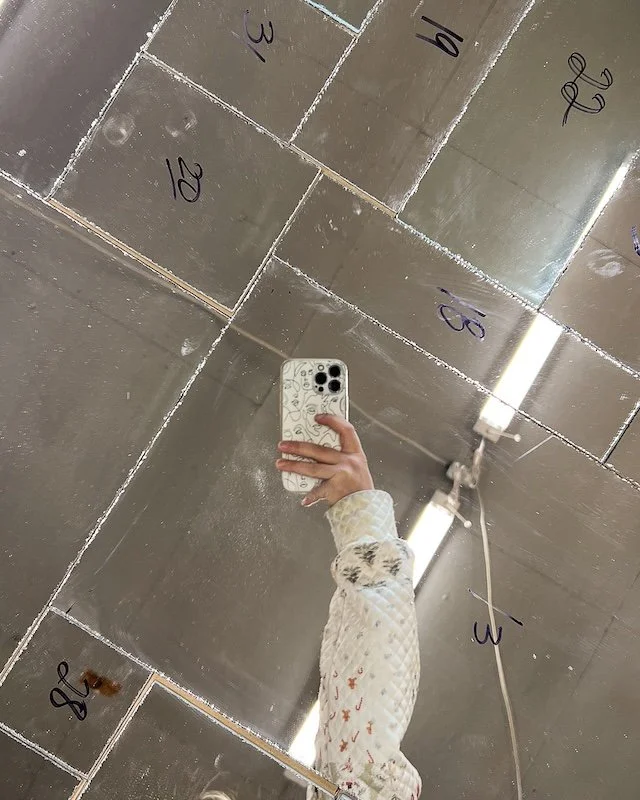
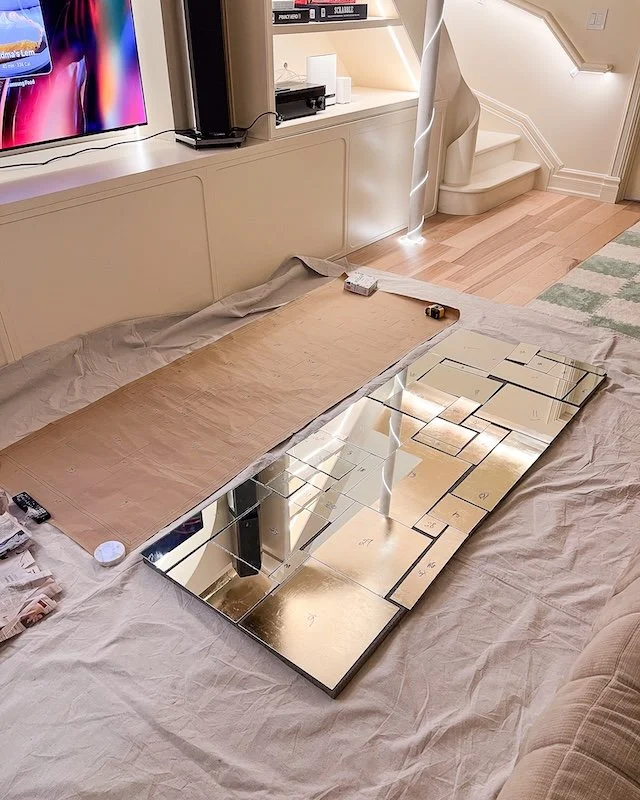
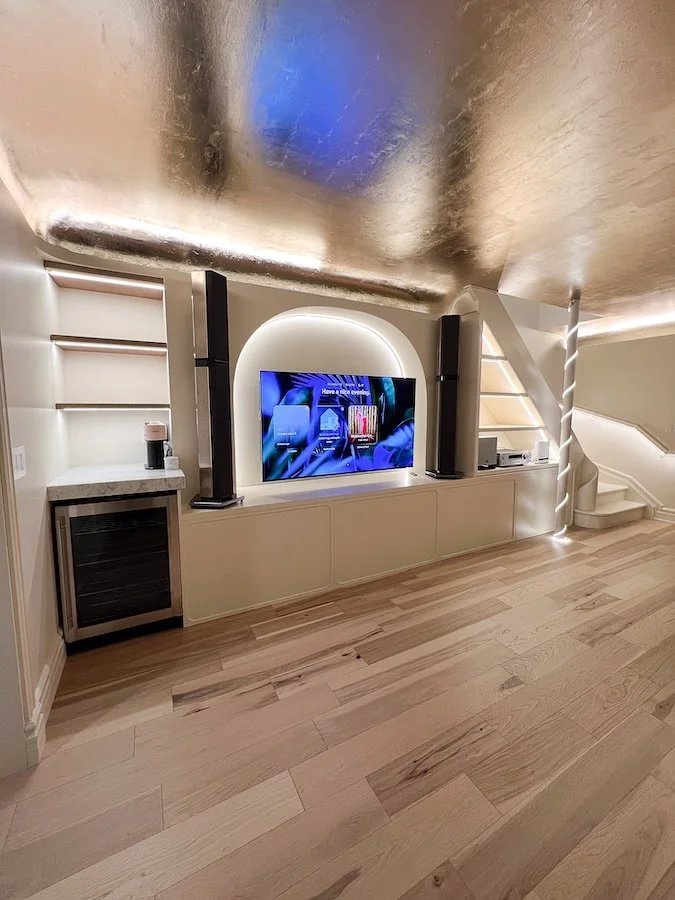
Prior to starting our basement underpin my husband and I knew we needed a space to gather, relax, watch TV and play with our son. I had already been gathering inspiration for months and was drawn to the idea of designing a space that felt more like a theatre room versus a secondary living room. Given that I live in a 125+ years old Toronto Romanesque Victorian, gold foiling the ceiling just felt appropriate. I knew if I could pull off applying the gold foil, the combination of the cove ceiling and the recessed LED light channel would take the room’s ambience to a whole new level. Still, I had never gold foiled anything before. Intimidated by the idea, I did a lot of research before starting and can thankfully report that there was no need to be. Applying gold foil to the ceiling was super fun, almost meditative and honestly it’s kind of a forgiving DIY material. There is no need to worry about not having lots of experience with this one, just be ready to get covered in glitter after.

Gold Foil Experiment

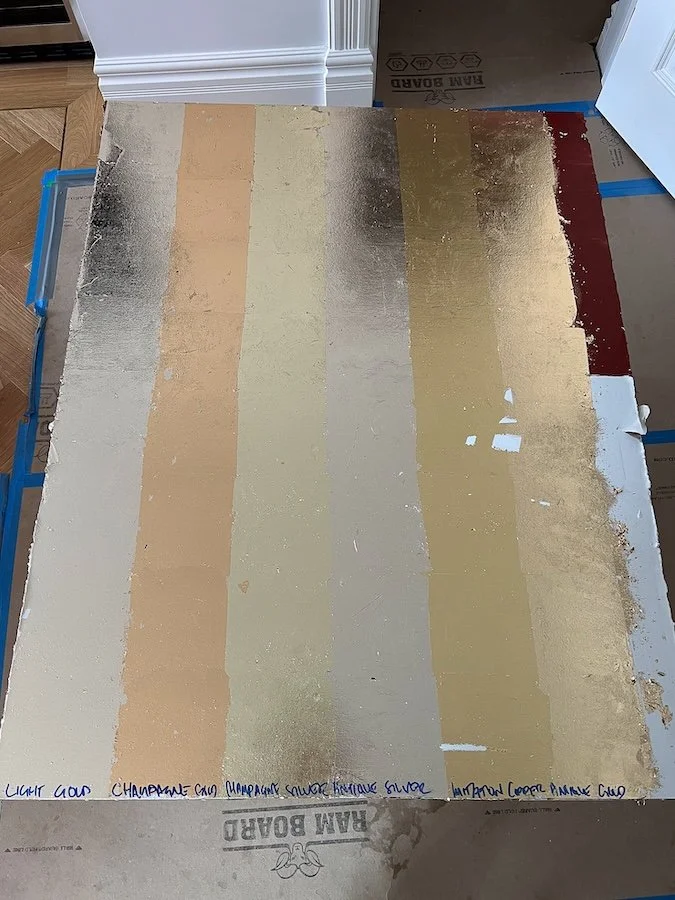
If you aren’t following me on Instagram you would have totally missed the series of stories I posted this past April of my gold foil experiment. Essentially I had sourced some imitation gold foil from China and had received several gold variation samples to try. Since we were in the process of finishing our basement, I grabbed a left over piece of drywall and over the next two days fixed it up and got it paint ready.

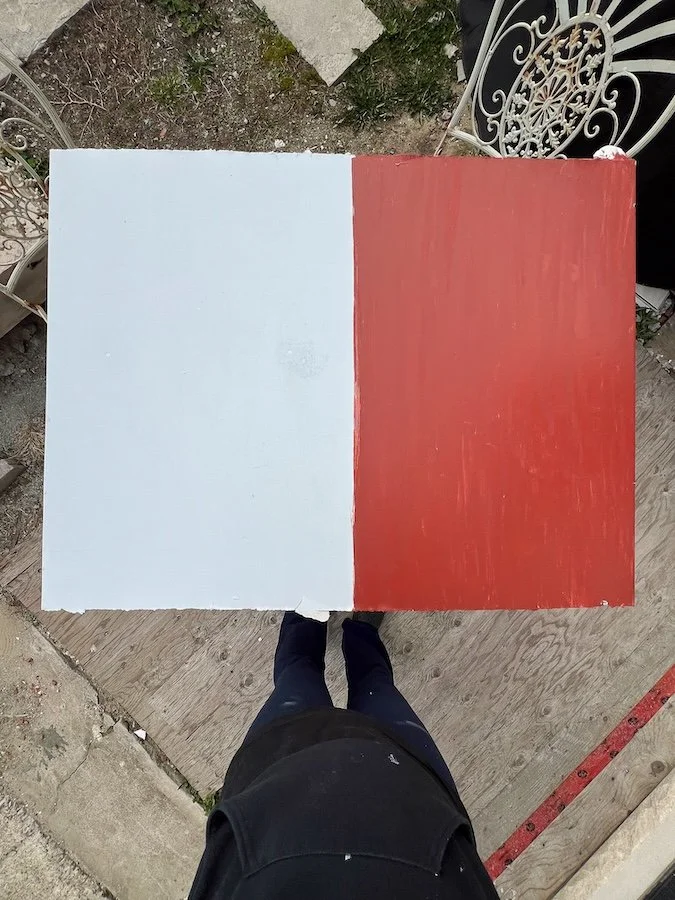
During my research I had noticed a base coat was used in several references. Still I had questions…. If you properly cover the area in foil, is it really necessary? Is a base coat just red paint? What makes it special? So during my sample test I experimented and applied a red base coat to only half of the test piece and although in the end I concluded that there really was no difference from the side that did have a base coat vs the side that didn’t, I did use a base coat on my basement ceiling.

Ultimately my husband reminded me that I was doing this for the first time and this was not the project to skip steps on. LOL! So I did it. Just to be clear though, I do not think a base coat is any different from a water based red paint or is special in any way. Maybe if you are using real gold foil it would be different but for the imitation stuff, I did not notice any difference following my gold foil experiment.

In the end I choose ‘light gold’ for the basement. I knew the LED cove lighting would warm it up so I tried to keep that in mind when visualizing what it would look with the green cabinetry and cream walls. If you are going to attempt to do a room vs an object, I recommend you take the lighting and colour of the room into account because it will have an effect on the foil.

Gold Foil Ceiling - cove ceiling - ideas for ceiling in basement - home theatre design

After finishing the ceiling I painted one wall green and noticed it sent an unexpected cast onto the ceiling so I pivoted!

Where To Get Gold Foil Materials

Other than the imitation gold foil which I sourced online from China, all the other materials you need for this DIY you can find at your local sculpture art store and hardware store. You can also find some of them on my Amazon Storefront.


FOLLOW ME ON INSTAGRAM @ISTHATSOH

Gold Foiling The Ceiling Steps & Tips

Ceiling Cove Recessed LED light channel - basement ceiling ideas

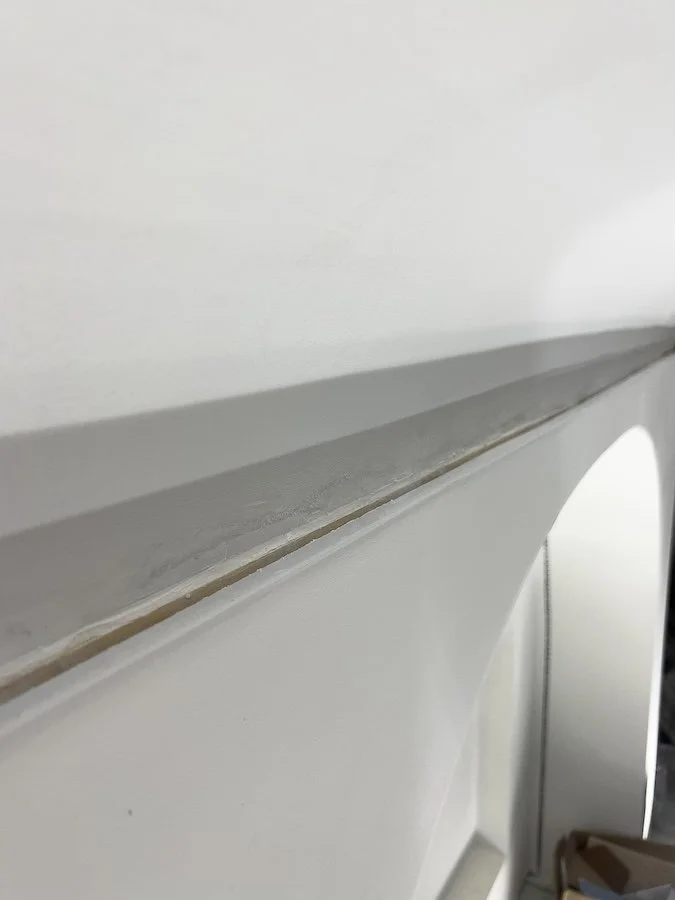
Fixed up the drywall edges before starting the foiling process.

Step 1 - Prep your workspace

I know ‘you’re only going to be as good as your base’ so the first thing I did was prep my workspace. The drywall edges along the ceiling cove were rough and had lots of gaping so I used Polyfilla all along the edges, applying it generously with a spatula before wiping all excess away. Once the Polyfilla dried I gave it a quick sand, vacuumed the area and applied a coat of primer.

Tools & Materials Used:

TIP: Cover your floors! I spilled glue a few times during this DIY and was very thankful I had put a protective layer down to protect my new floors.

Ceiling Design - gold foiling - base coat - ceiling cove - ceiling ideas

Applied a red base coat to the entire ceiling

Step 2 - Apply your red base coat

Once my primer was dry I could begin applying my base coat. To do this I used a microfibre roller and rolled it on the entire area.

Tools & Materials Used:

  • Gold Foil Base Coat *check can to see if you need to shake it before opening*

  • Microfiber Roller

  • Paint Tray

  • Stir Stick

TIP: Although rolling the base coat on was really easy, I do remember the roller soaked up a lot of product and the biggest size I could find of the base coast was a 32 Oz Quart. I had ordered two cans and just had enough to cover my ceiling. If you are going to do a red base coat my advice is to get more of this product than you need because it doesn’t go as far as you would think. The next two product, the adhesive and sealer, actually do go further but this base coat doesn’t…

Still so suspect about the base coat. LOL

Ceiling Design - gold foiling - ceiling cove - ceiling ideas

The Metal Leaf Adhesive starts milky and turns clear after an hour

Step 3 - Apply Metal Leaf Adhesive

When the base coat dried completely I could move onto the adhesive. You need to apply the adhesive generously without leaving puddles and wait an hour for it to get tacky. When you first apply the adhesive it will have a milky appearance but as it sets and becomes tacky it will go clear. That is how you know it’s ready for foil.

Tools & Materials Used:

  • Gold Foil Adhesive *check can to see if you need to shake it before opening*

  • Paint Brush (my preferred) or Roller

  • A clean take out food container (I used this to hold and store my glue so I didn’t have to contaminate the can

TIP: Since I could only work on this project during my son’s nap time and in the evenings, I decided to work in three foot by three foot sections. This project did take me a few weeks to complete so instead of covering the entire ceiling in adhesive I would repeat steps three and four each time to ensure my glue was always ‘fresh’ vs covered in dust or debris from being exposed for multiple weeks. If you are working on a smaller area or have more time available to complete your project, you can totally do it in one go otherwise I would suggest doing it in sections like me.


ENJOYING THIS CONTENT? CHECK OUT SOME OF MY OTHER EPISODES AND BLOG POSTS!


Ceiling Design - gold foiling - ceiling cove - ceiling ideas

Step 4 - Apply Gold Foil

Once the glue becomes tacky you can start applying the foil. I began in a corner and worked my way across one wall. Anywhere you applied glue, foil will stick to. Getting the hang of applying the foil does take a little bit of practice but after you do one pass it gets a lot easier . Even if you do a terrible job with the first pass, know you can always go over it. That’s what I did after I finishing the whole ceiling. I had perfected the application by the end and went back to that first strip of wall, applied glue, waited an hour, and did the whole section over. You can’t even tell there are two layers of material so don’t worry about getting it perfect.

When applying the foil, the easiest way to do it is to try and overlap the sheets so you know you’re covering everything but since I don’t live in a perfect world where I get the placement right every time, if you do have gaps, you can just take some scrap foil and place it is that area. Foil will stick to anything that has glue on it and any excess will get brushed away so you wont notice the small gaps you covered up with scrap foil in the end.

Every once and awhile I would throw up a laser level just to reset my lines but honestly I didn’t fuss to much about getting them perfectly straight all the time and I don’t think it shows or is even noticeable in the end.

Once I applied foil to the entire section I was working on I would use a wide, flat head brush to push out all the air bubbles before going back in with a small fluffy head brush and gently brush all the excess foil away. This is the super messy bit of the project so be prepared for everything to be covered in glitter.

Tools & Materials Used:

  • Gold Foil Sheets

  • Wide, Flat head brush

  • Small fluffy head brush

TIP: I noticed in the first pass that the foil was very delicate and would get stuck to any small amount of adhesive that was left behind on my hands. To help minimize this I would rub a drop or two of olive oil on my hands after completing step 3 (applying the adhesive). This I found significantly helped make the foil application processes go smoother.

Gold Foil Ceiling - cove ceiling - ideas for ceiling in basement - home theatre design

Step 5 - Apply Gold Leaf Sealer

Once I completed the whole ceiling it was time to add our final coat, a sealer. For this I used a foam roller which, not so much that you would notice but did leave some streaks if I look closely. If I could do this part again, I would maybe try a microfiber roller over a foam roller for his application, or maybe do two coats as I only did one, but yea, didn’t love the foam roller for this step.

Tools & Materials Used:

  • Metal Leaf Sealer *check can to see if you need to shake it before opening*

  • Microfiber Roller

  • Paint Tray

Alright friends, thank for joining me for another episode of Soh At Home! I hope you enjoyed this Gold Foil Ceiling DIY tutorial and gave it a thumbs up. If you have any questions about my gold foil ceiling or cove ceiling design feel free to leave them in the comments below. I did start a new Instagram for my new Soh At Home series so if you would like to show your support, feel free to give it a follow!

Until next time,

- Soheila


PIN THIS POST

Gold Foil Ceiling Tutorial Episode 2 of Soh At Home Basement Reveal

HOW TO PAINT MELAMINE CABINETS - A SMALL BATHROOM MAKEOVER DIY

BATHROOM MAKEOVER DIY - PAINTING MELAMINE CABINETS

So I was at my mom’s house the other day and she asked if I could help her with her powder room. Essentially the powder room in her basement is so out of date it’s practically screaming for help. It has had the same melamine counter top and vanity since the house was built over 30 years ago. To make it worse, it also has a super gross drop-in sink and old acrylic faucet knobs that need to go!

In order to update this bathroom I decided to upgrade the counter top and faucet with something nice but keep the melamine vanity as is and just give it a fresh coat of paint.

For the counter top I went with white quarts with an under-mount sink already installed from a local fabricator. The counter top and sink cost me under $400. The faucet I got at Canadian Tire was simple and in chrome. It was on sale and was under $100 so I was really happy about that. I also got my paint brush, a small foam roller, a painter tray, and some painters tape while at Canadian Tire, which was another $30-ish.


FOLLOW ME ON INSTAGRAM @ISTHATSOH

Can You Paint Melamine?

When it comes to the melamine vanity, I had plans to paint it. Painting melamine cabinets is actually super easy it just takes awhile because you have to let the paint dry in between coats. Before you paint any melamine surfaces it is important to roughen up the surface before applying a primer though so that the colour paint adheres properly to the melamine.

Bathroom Vanity Makeover - Before Photos

When you are starting a project like this the first thing to do is prep your space. I like to put some cardboard down to protect the floor and remove any hardware. In this case both the hinges and doors needed to be removed. I tried to remove the fake drawers as well but the sink was in the way and I was unable to get in there to remove the screws, so I just left them attached.

MELAMINE CABINET MAKEOVER

Home DIY Projects - Bathroom Makeover DIY - Painting cabinets

Next I sanded the melamine vanity down using 120 grit sandpaper and my sanding mouse.

NOTE: You want to roughen up the surface so that the primer paint adheres well to it but you don’t want to over sand it to the point you start to dull corners or ruin the surface.

In places that I couldn’t get into with my sanding mouse I went in by hand with some sanding paper.

After you are done sanding take a damp cloth and wipe the whole vanity down.

While the vanity dries, repeat those three steps with the doors making sure to sand down and wipe the sides of the vanity doors.

PAINTING CABINETS

Once everything is dry you can start painting the melamine cabinets with your first coat of primer. I like to paint one side and 3 of the 4 edges of each door first then let it dry for 12 hours before returning and doing the opposite side and final edge.

I used a small foam roller on the doors and a mix of roller and brush on the vanity.

I purchased 1 quart of Benjamin Moore Stix® Waterborne Bonding Primer for this project and it was more than enough.

After both sides have been primed and given time to dry, I then did two coats of Benjamin Moore ADVANCE Interior Paint- Semi Gloss in ‘October Mist’ which is this beautiful sage green colour that is so popular right now and one of my favourites.

Home DIY Projects - Bathroom Makeover DIY - painting a vanity

I used the Benjamin Moore colour ‘October Mist’ for this bathroom vanity makover

As for the doors I used the same technique of painting one side and 3 of the 4 edges before leaving that to dry for 12 hours and returning to do the other side and last edge.

Once you get two colour coats on both the vanity and doors, and everything has fully dried, you can go ahead and reinstall your doors.


ENJOYING THIS POST? CHECK OUT THESE OTHER LIFESTYLE POSTS!


After I finished painting the vanity, the new quarts countertop with an undermount sink went in along with my new faucet from Canadian Tire and voila, my bathroom makeover is complete!

Home DIY Projects - Bathroom Makeover DIY - painting melamine

My Small Bathroom Makeover DIY After Painting Melamine Cabinets


Thank you for joining me today as I shared this bathroom vanity makeover with you. I hope enjoyed this bathroom makeover DIY and found painting melamine cabinets to be easy too. If you have any questions about this bathroom makeover on a budget or have any questions regarding home DIY projects or painting a vanity, feel free to leave them in the comment section below!

Until next time!

-S


PIN THIS POST

DIY WREATH FOR SPRING!

Wreath for front door spring - front door wreath for spring

My floral wreath for spring!

DIY WREATH FOR SPRING

After a cold winter, spring is a time of revival. A time to reinvigorate your life and for new beginnings. A time where evidence of dormant plants begins to appear and hibernating animals awake from their slumber. Much like the outside world, I too awaken in the spring with a new sense of energy to create, decorate and prepare for warmer days, but this year things felt different. More purposeful. More rewarding.

Since moving into our new Toronto Victorian home last August, each season has been a completely new experience and opportunity to decorate. In the fall, I used pumpkins to dress up my front step. In the winter, I added festive garlands, planters and ribbons to add holiday cheer. Now with spring upon us I have the urge to add decorations once again, but this time I thought an outdoor spring wreath for the front door would be a perfect accessory. Outdoor spring wreaths are a great way to add a pop of colour to any entrance way and a great way to excite those who see it of warm days ahead.

Having never made a wreath for spring before I wasn’t sure how this project was going to turn out but after a quick trip Michael’s to pick up a grapevine wreath base and a few additional supplies, I was excited to begin creating.

As it turns out, creating an outdoor spring wreath isn’t hard at all! It’s actually super fun, easy to do and took me maybe 40 minutes max. I think the most difficult part of the whole experience was deciding what colour palette I wanted to use and which artificial flowers I was going to buy.


FOLLOW ME ON INSTAGRAM @ISTHATSOH

HOW TO MAKE A WREATH FOR SPRING

To help me get inspired, I went over to Michael’s spring crafting section which had a bunch of pre-made spring outdoor wreaths ready to go. I paid attention at the colours used, the flowers chosen, and how they were constructed before cross referencing with a photo of my front door. Doing this allowed me to confidently pick a colour palette that would not only suit my home but help me determine the size of wreath I wanted and how I would hang it.

Once I decided on the colour palette, I returned to the artificial flower section to make my selection. Since lavender is one of my favourite colours and a popular Easter colour, I knew I wanted to stick to a cool tone palette, so I picked a variety of stems that added a variation of size, texture and colour with this in mind. To help me narrow down the options, I would lay them down on the wreath visualizing how they would go together and their placement. In the end I bought a total of 8 stems which ended up being the perfect amount.

Upon returning home, I laid all my flowers out on my crafting table along with a sharp pair of scissors and some floral wire I had also purchased. Using my hands, I started to manipulate one of the stems around the grapevine wreath, tying it into place by wrapping wire generously around both it and the grapevine. Once secure, I cut off the unsightly bottom of the stem and repeated the process with my largest flower, a faux hydrangea. After the first stem (my base) and largest flowers (my anchor) were securely tied to the grapevine, I was then able to start using my scissors to cut off the other flowers from their stem and just push them into the small crevices within the grapevine wreath to secure them. Between the tightness of the wire and the density of the grapevine, all additional flowers stand in place without requiring additional wire or glue to secure them which ended up making the rest of my DIY outdoor spring wreath progress very fast. It also made placement of the flowers forgiving as I was able to try different positions easily.


CHECK OUT THESE OTHER FUN DIY’S


HOW TO MAKE A BOW FOR A WREATH

In addition to flowers, adding a bow to your wreath is another great way to add variety and dimension to your design. Making a bow can easily be done at home and doesn’t take much time at all. If you are unsure of how to make one yourself or have a hard time remembering, here are two easy tutorials that demonstrate how to make a bow for a wreath.

HANGING YOUR OUTDOOR FLORAL SPRING WREATH

Once I finished placing all my flowers onto the wreath, I now needed to figure out a way to attach it to the door. Using my floral wire I created a small loop around my fingers and fastened it to the grapevine by twisting it around both the loop and grapevine. Doing so allowed me to create a small hanging loop for my now completed wreath that fit perfectly over a small nail already protruding from my front door.

In the end, my DIY wreath for spring turned out amazing and I am so happy with the results. If you are thinking about creating an outdoor spring wreath for your home and have any further questions about how to make a wreath that I did not answer in this blog post, feel free to leave them in the comment section below!

Happy crafting!


PIN THIS POST

DIY CHRISTMAS DECORATIONS: PAPER SNOWFLAKES!

DIY CHRISTMAS DECORATIONS: PAPER SNOWFLAKES!

There is nothing like a little Christmas crafting to get you and your space into the holiday spirit! Am I right?!

Since moving into our new Toronto Victorian home a few months ago, I have been so focused on getting our first floor renovations started that I didn’t expect to be able to celebrate Christmas in our new home. Perhaps overly ambitious on my part, I expected to be in the throws of renovations, unable to host festive soirees this year with friends and family but instead, I was given the gift of time. Time to slow down, settle in and savour the season.

So yesterday, I popped out to the store to grab some crafty materials to create these super cute paper snowflake to jazz up my space for the holiday season. I love how each paper snowflake has its own unique shape and look, and how impactful this inexpensive Christmas decor DIY can have on your space!

If you are looking for a fun and craft way to get into the holiday spirit, you are going to love this simple DIY Christmas decoration and new paper snowflake hack!


FOLLOW ME ON INSTAGRAM @ISTHATSOH


ITEMS YOU WILL NEED FOR THIS SIMPLE CHRISTMAS DECOR TUTORIAL

Makes 1 Snowflake

MATERIALS:
8-10 Paper Lunch Bags - I purchased a variety of colours and sizes from the store
A Hot Glue Gun
1 Glue Sticks - this is plenty and more then enough for making one paper snowflake
Scissors
Tape or String to use for hanging/fastening the snowflake to the wall

Additional Optional Fun Materials:
Spray Paint - I spray painted some of mine silver and it looked really cute
Glitter
Adhesive Pearl Stickers

SIMPLE CHRISTMAS DECOR THAT MAKE A BIG IMPACT!

In the shape of a ‘T’, add hot glue to the backside of a paper bag before sticking another paper bag on top.

Repeat until you have done this for all 8-10 bags.

Using your scissors, cut a unique shape into the bag - it doesn’t have to be even or symmetrical.

Open and glue ends together to reveal your unique snowflake which is now ready to be taped to the wall, or added to your space!

Check out this video below for further clarification!


CHECK OUT THESE OTHER FUN DIY HOME DECOR IDEAS


I hope you enjoyed making these super cute DIY Christmas decorations as much a did. If you have any questions about this simple, paper snowflakes Christmas decor hack, feel free to share them in the comment sections below.

Happy crafting!


PIN THIS POST